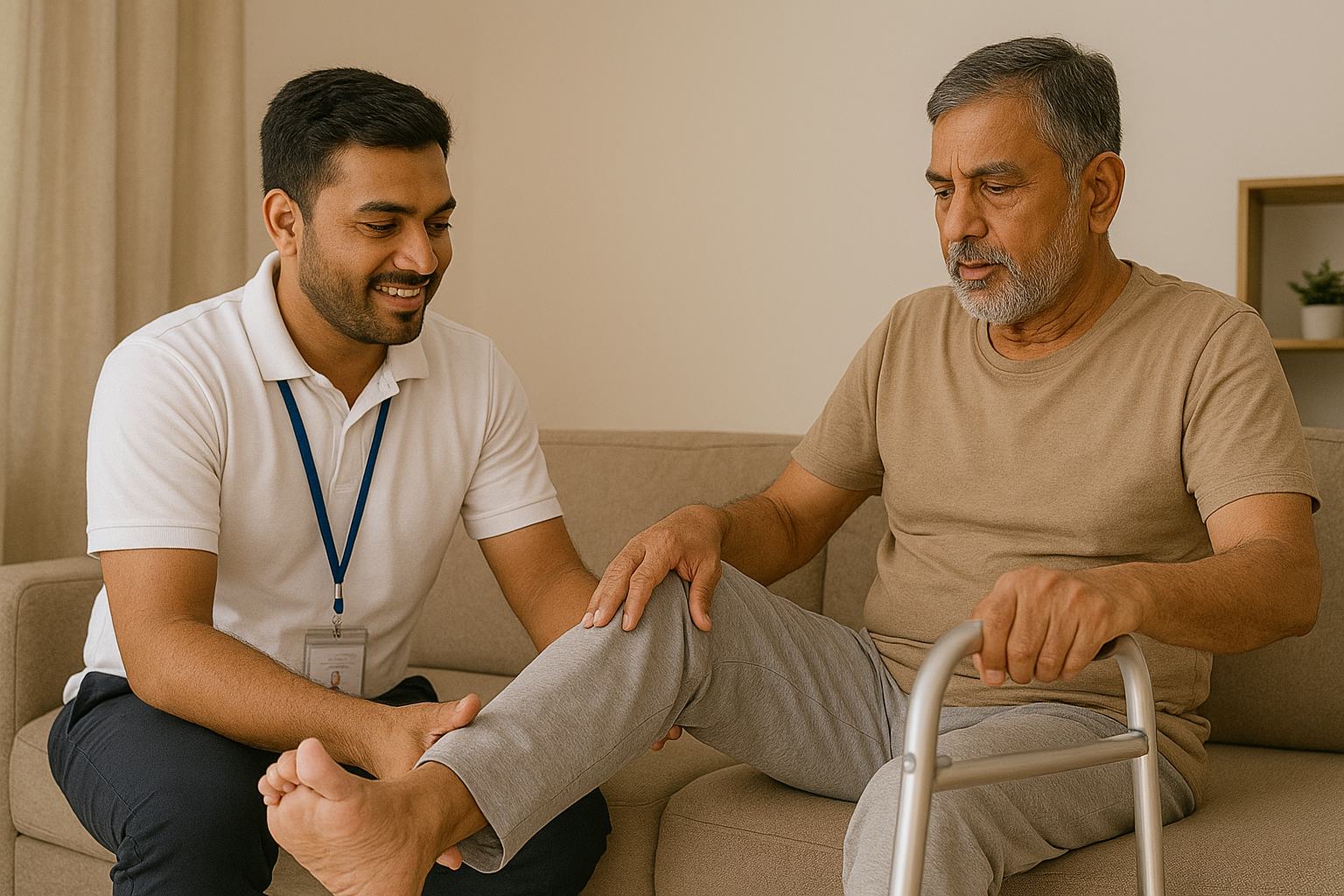
Physiotherapy for Paralysis Patients at Home in Delhi NCR
After a stroke or episode of paralysis, regaining mobility and independence is the priority, and getting to a clinic regularly is often the hardest part of recovery. Physiotherapy for paralysis at home brings advanced neuro-rehabilitation, task-specific training and muscle re-education directly to your doorstep, so recovery isn't slowed down by travel. Eternia Physio provides post paralysis physiotherapy at home near Delhi, with programs tailored to each patient's recovery pace across Delhi, Gurugram, Noida and the wider NCR.
Understanding Paralysis and Stroke Recovery
Paralysis can result from a stroke, spinal cord injury, nerve damage or other neurological conditions, and it may affect one side of the body, the lower limbs, or all four limbs depending on the type: hemiplegia, paraplegia, diplegia or quadriplegia. Whatever the cause, the goal of physiotherapy for stroke patients at home is the same: rebuild strength, restore movement and help the patient regain as much independence as possible.
Paralysis Treatment and stroke recovery with physiotherapy work best when therapy begins early and continues consistently, which is exactly what home-based care makes possible.
Physiotherapy After a Stroke: Why Timing Matters
Physiotherapy after a stroke should ideally begin as soon as the patient is medically stable, often within days of the event. This early window is critical, since the brain's ability to rewire and recover function is highest in the first few months. Delaying therapy, even by weeks, can slow overall progress.
Stroke recovery physiotherapy at home removes the biggest barrier to starting early: the physical difficulty of transporting a patient with limited mobility to a clinic. Our physiotherapists come to you instead, so treatment can start the moment the patient is ready.
Our Home Rehabilitation Approach
Eternia Physio's paralysis and stroke home rehabilitation treatment in Delhi combines several evidence-based techniques, adjusted to each patient's specific condition and stage of recovery:
Task-Specific Training: Practicing real, functional movements such as standing, walking or reaching helps the brain relearn these actions more effectively than isolated exercises alone.
Muscle Re-Education: Techniques that reconnect the brain's signals to weakened muscles, helping restore voluntary control over affected limbs.
Balance and Coordination Training: Structured exercises rebuild the stability needed for safe standing, transfers and walking.
Spasticity and Stiffness Management: Gentle stretching and positioning techniques reduce muscle tightness, which is common after stroke and paralysis and can limit movement if left untreated.
Mobility and Transfer Training: Patients and caregivers are taught safe techniques for moving in and out of bed, sitting up, and using assistive devices where needed.
Effective Exercises for Paralysis Recovery
Effective exercises for paralysis recovery depend heavily on the patient's current strength, the affected side of the body and the stage of recovery. A home visit physiotherapist typically guides patients through:
Passive range-of-motion exercises for limbs with little or no voluntary movement, to prevent stiffness and maintain joint health
Active-assisted exercises as some movement returns, combining patient effort with therapist support
Strengthening exercises for muscles regaining function
Balance exercises in sitting and standing positions
Gait training to rebuild a safe, stable walking pattern
Because paralysis recovery is highly individual, exercises are continuously adjusted rather than following a fixed program.
Physiotherapy for Paralysis Patients for Faster Recovery
Consistency is one of the strongest predictors of recovery speed after stroke or paralysis. Physiotherapy for paralysis patients for faster recovery works best when sessions happen regularly and without interruption, something home-based care makes far easier for families managing a patient with limited mobility.
No travel stress for a patient who may struggle to sit, stand or transfer safely
One-on-one, focused sessions with a dedicated physiotherapist
Caregivers trained directly in positioning, transfers and home exercises
Treatment adapted to the patient's actual home layout, bed and furniture
Flexible scheduling, including emergency and weekend visits
Related Conditions We Also Treat
Paralysis and stroke recovery often connect to other neurological conditions. Our home visit physiotherapists in Delhi NCR also manage:
Key Benefits of Physiotherapy for Paralysis at Home
Physiotherapy for paralysis at home helps improve movement, strength, balance, and independence in daily activities. A personalised home-based program provides convenient rehabilitation in a familiar and comfortable environment.
Improves muscle strength and control
Enhances daily activity performance
Reduces stiffness and spasticity
Supports faster relearning of functional movements
Builds confidence in standing, walking and transfers
Reduces caregiver strain through direct training and guidance
Delivers consistent, uninterrupted therapy in a comfortable home setting
Who Should Consider Physiotherapy for Paralysis at Home
Physiotherapy for paralysis at home can help improve movement, strength, balance, and independence in daily activities. It provides personalised rehabilitation in a familiar and comfortable home environment.
Patients recovering from stroke, especially in the early recovery window
Patients with hemiplegia, paraplegia, diplegia or quadriplegia
Patients recovering from spinal cord injury-related paralysis
Families for whom regular clinic visits are physically difficult
Anyone who wants faster, more consistent recovery without travel disruption
Book Physiotherapy for Paralysis Patients at Home Today
If you or a loved one is recovering from stroke or paralysis, Eternia Physio's expert physiotherapists bring paralysis and stroke home rehabilitation treatment directly to your doorstep across Delhi NCR. Book a home visit today and take the first step toward faster, more independent recovery.
When should rehab start after a stroke?
Ideally, rehabilitation should begin as soon as the patient is stable, often within days.
How long does recovery take?
Recovery varies; it may take weeks to months depending on severity and consistency.
Can physiotherapy fully reverse paralysis?
Full recovery is not always possible, but therapy maximizes functional independence and can significantly improve movement and strength.
Can family members be trained to help with home rehab?
Yes, our physiotherapists train caregivers in safe positioning, transfers and daily exercises so recovery continues between visits.
What is task-specific training in stroke rehab?
It involves practicing real, functional movements like standing, reaching or walking, which helps the brain relearn these actions more effectively than isolated exercises.
Is physiotherapy at home as effective as a hospital or clinic for paralysis recovery?
Yes, when delivered by trained physiotherapists. Home visits allow for the same clinical techniques, with the added benefit of consistency and a familiar environment.
Does Eternia Physio provide emergency paralysis physiotherapy at home?
Yes, we offer flexible scheduling including 24/7 emergency availability for patients needing immediate post-stroke or post-paralysis care.