

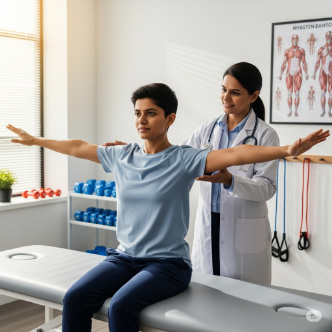
Myasthenia Gravis Physiotherapy at Home in South Delhi NCR
Myasthenia Gravis (MG) is a chronic neuromuscular disorder that causes weakness in the voluntary muscles, often affecting the eyes, face, throat, arms, and legs. People with MG may experience drooping eyelids, difficulty speaking or swallowing, fatigue, and muscle weakness that worsens with activity and improves with rest. While there is no cure, physiotherapy plays a supportive role in improving strength, endurance, breathing function, and overall quality of life. With personalized therapy, patients can learn energy conservation techniques, maintain mobility, and manage daily activities more effectively.
Living with Myasthenia Gravis can make everyday movement, from climbing stairs to lifting a cup of tea, feel exhausting. At Eternia Physio, we bring specialised Myasthenia Gravis physiotherapy at home in South Delhi, Indirapuram, and East Delhi, helping patients manage muscle weakness and regain strength without the stress of travelling to a clinic.