


Physiotherapy for Knee Pain: Best Exercises and Treatment Guide
Knee pain is one of the most common problems that gets in the way of daily life. Walking, bending, sitting on the floor and climbing stairs can all become difficult. It usually comes from weak supporting muscles, arthritis, old injuries or gradual wear in the joint. Ice packs and heat can calm things down for a while, but they rarely fix the root cause.
Physiotherapy for knee pain is one of the safest and most effective long-term options. Exercises such as quad sets, hamstring stretches, half squats and calf raises strengthen the knee, restore flexibility and ease discomfort. If you are looking for physiotherapy at home in South Delhi, a trained therapist can bring this care to your doorstep and build a plan around your condition.
Knee osteoarthritis is a leading cause of disability worldwide, which is why starting physiotherapy early matters for long-term joint health.
Causes of Knee Pain You Should Know
Knee pain becomes more common with age. Joints grow stiffer, and the fluid that lets them move smoothly reduces over time. Bones and cartilage then rub together, which causes pain. The muscles around the knee also weaken, so the joint gets less support, and bones can become fragile and slower to heal after a fracture.
Common causes include:
- Osteoarthritis, a joint condition that develops with age
- Old injuries that never healed properly
- Torn or damaged knee ligaments
- Earlier fractures around the knee
- Sitting for long hours in cramped or bent positions
- Kneeling on hard surfaces for long periods
- Injuries from falls, accidents or sudden impact
- Infections inside the joint
- Gout or pseudogout
Gout happens when uric acid builds up in the joint, leaving the knee swollen, red and very painful. Physiotherapy for knee pain helps reduce swelling, rebuild muscle strength and bring back comfortable movement.
Symptoms of Knee Pain You Should Know
Knee pain feels different for everyone. Some people feel it at the front, others at the side or deep inside the joint. The most common signs are:
- Swelling and stiffness around the knee
- Redness and tenderness to touch
- Cracking or popping sounds during movement
- Weakness in the leg muscles
- Poor balance or a feeling that the knee may give way
- Difficulty getting up from a chair
- Trouble fully straightening the leg
If you notice these signs regularly, see a doctor. The knee is a complex joint made of bones, cartilage, tendons and ligaments, so it can be strained, sprained or fractured, and it can degenerate over time. A sudden twist of the foot is a frequent cause of injury.
Physiotherapy Treatment for Knee Pain
A good physiotherapist examines your posture, walking pattern and knee movement before deciding on treatment. Care may include stretching, strengthening, manual therapy and joint mobilisation. Whether the cause is a sports injury, arthritis, ligament strain or plain stiffness, regular sessions improve mobility, reduce inflammation and protect the joint in the long run.
Top Benefits of Physiotherapy for Knee Pain
- Less pain and stiffness without depending on strong medicines
- Better range of motion and flexibility
- Stronger thigh, hip and calf muscles that take pressure off the knee
- Improved balance and stability
- Lower risk of future injury
Controlled exercise works better than complete rest for most chronic knee conditions. Still, check with your physiotherapist before starting, because the wrong exercise can sometimes make things worse. For osteoarthritis, strengthening the muscles around the knee is widely recommended as a first-line, non-surgical approach.
Lower-Body Stretches for Knee Pain
Stretching makes the knee move better and feel less stiff. Warm up for 5 to 10 minutes first by walking, slow cycling or using a cardio machine. Aim to stretch 4 to 5 times a week, and you can repeat the stretches after strengthening work.
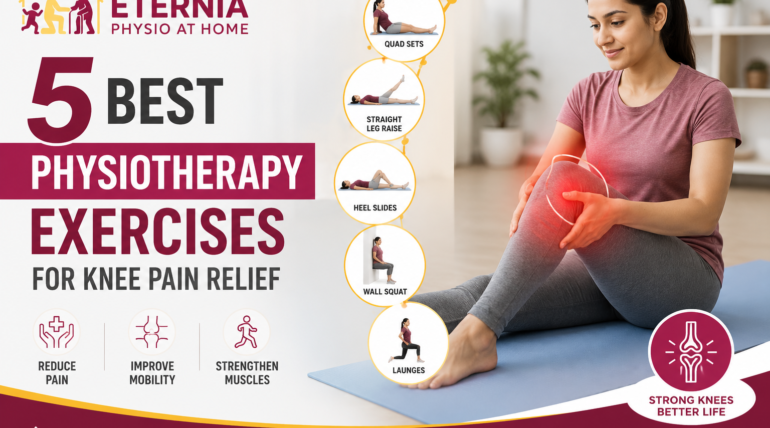
5 Best Physiotherapy Exercises for Knee Pain Relief
These exercises suit people with knee osteoarthritis, stiffness or age-related weakness. They are easy to do as home physiotherapy exercises for knee pain.
1. Heel and Calf Stretch
Tight calves make knee pain worse and affect how you walk.
- Stand facing a wall with both hands on it.
- Keep your toes pointing forward.
- Step one leg back, keep that heel flat and gently lean forward.
- Hold for 30 seconds, then switch legs.
Benefit: loosens the calf muscles and eases strain on the knee.
2. Quadriceps Sets
The quadriceps at the front of the thigh keep the knee stable.
- Lie flat with both legs relaxed.
- Keep one leg straight and tighten the thigh muscle.
- Hold for 5 to 10 seconds, then relax.
- Repeat 10 to 15 times.
Benefit: builds support around the joint with almost no strain.
3. Hamstring Stretch
Tight hamstrings cause pain while walking and bending.
- Sit on a chair and stretch one leg straight out.
- Keep your back straight and lean forward slightly.
- Hold for 15 to 20 seconds, then switch legs.
Benefit: improves flexibility and reduces stiffness over time.
4. Half Squat
Strong glutes, quadriceps and hamstrings share the load that would otherwise fall on the knee.
- Stand with feet shoulder-width apart.
- Squat down halfway only.
- Hold for a couple of seconds.
- Push through your heels to stand up.
- Repeat 10 to 15 times.
Benefit: strengthens the major knee-supporting muscles. Research on resistance training suggests that several weeks of progressive strengthening can reduce pain and improve function in people with knee osteoarthritis.
5. Calf Raises
- Stand near a wall or chair for balance.
- Slowly rise onto your toes.
- Hold for a second, then lower slowly.
- Repeat 10 to 12 times.
Benefit: strengthens the lower leg and improves stability while walking.
Tips for Safe Exercise
- Move slowly and with control.
- Stop right away if pain increases.
- Speak to a physiotherapist if you have arthritis or a past knee injury.
- Consistency is the key to long-term relief.
Other Low-Impact Exercises for Knee Pain
Once your knee gets stronger, add low-impact activity, which puts less pressure on the joint than running or jumping. Good options are walking, swimming, stationary cycling, water aerobics, yoga, tai chi and the elliptical machine.
Simple Overall Treatment Plan for Knee Pain
- Apply ice if it helps with pain and swelling.
- Use a knee support or compression sleeve for stability.
- Take pain relief medicine for a few days if needed, as advised by your doctor.
- Book physiotherapy for a personalised plan, correct technique and regular progress checks.
Why Physiotherapy Is Better Than Just Home Remedies
Ice, rest and painkillers give short-term relief but do not fix the real cause. Relying on them alone lets the pain return and reduces movement. Physiotherapy finds the root cause and builds a plan around it, combining strengthening, gentle stretching, manual therapy and joint mobility work. Over time pain reduces, muscles get stronger and the chance of re-injury drops.
When Should You See a Doctor or Physiotherapist?
Get professional help if:
- Pain continues for more than a few days without improvement
- Walking, stairs or standing hurt
- The knee is swollen, warm or red
- You hear unusual popping or clicking
- The knee feels unstable or locks suddenly
Starting physiotherapy early improves your chances of a faster, more comfortable recovery.
Why Choose Eternia Physio for Physiotherapy at Home in Delhi NCR
Eternia Physio brings qualified physiotherapists to your home across Delhi NCR, so you can recover without the stress of travel.
- Home visits across South Delhi, East Delhi, Indirapuram, Ghaziabad and nearby areas
- Complete assessment followed by a personalised knee pain treatment plan
- Experienced, certified physiotherapists
- Flexible appointment timings with easy rescheduling
- Guided exercise routines with regular progress monitoring
- Care for post-surgery recovery too, including post knee replacement physiotherapy at home in Delhi NCR
- Full privacy and a supportive, comfortable environment
If your pain is linked to wider muscle or joint problems, our musculoskeletal physiotherapy service can help.
FAQ about Physiotherapy for Knee Pain
Q. Can physiotherapy help with knee pain?
Yes. Physiotherapy reduces pain, restores joint movement and builds strength around the knee. Regular sessions with a qualified physiotherapist support faster recovery and better long-term knee health.
Q. Is physiotherapy for knee pain available at home in Delhi NCR?
Yes. Eternia Physio provides physiotherapy at home in South Delhi, East Delhi, Indirapuram, Ghaziabad and other parts of Delhi NCR, so you do not need to travel to a clinic.
Q. What is the best physiotherapy for knee pain?
The best approach combines strengthening exercises, gentle stretches, manual therapy and targeted treatments such as heat or ice. The exact plan depends on your diagnosis and mobility.
Q. How many physiotherapy sessions are needed for knee pain?
Mild knee pain may improve in 6 to 8 sessions, while chronic or complex conditions may need 10 to 15 sessions. Your physiotherapist monitors progress and adjusts exercises along the way.
Q. Can I do knee physiotherapy exercises at home on my own?
Simple exercises like quad sets and gentle stretches suit mild pain. For arthritis, injury or ongoing pain, follow a physiotherapist’s guidance to avoid making things worse.
Q. What exercises should I avoid with knee pain?
Avoid running, jumping, deep squats and any movement that triggers sharp pain or swelling. Check with your physiotherapist before adding new exercises.
Conclusion of Best Physiotherapy for Knee Pain
Knee pain does not have to limit your walking, stairs or daily routine. Home remedies may calm symptoms for a while, but lasting relief comes from strengthening the muscles around the knee, improving flexibility and fixing the cause. If you live in South Delhi, East Delhi, Indirapuram or anywhere in Delhi NCR, Eternia Physio can bring expert care to your home. Book your home physiotherapy session today and take the first step toward pain-free movement.